
What items are banned from a roll-off dumpster?
The list is longer than most people expect, and it exists because certain materials damage equipment, contaminate soil or turn into a fire risk when compacted. Tires trap gas and shift the load. Car batteries and lead-acid batteries leak acid into the container floor. Propane tanks and aerosol cans can explode under compaction. Freon-bearing appliances, like refrigerators and window units, need separate handling because of the coolant. Paint cans, herbicides and pesticides count as hazardous waste in most municipal systems, and handling them wrong triggers the same washing rule construction crews follow under OSHA 1926.51(f)(1), which covers cleanup after exposure to paints, coatings, herbicides or insecticides. If your project is generating that kind of debris alongside general trash, look at a construction dumpster rental instead of guessing what a standard bin allows. Wet concrete, asphalt and dirt usually need their own container because of weight, not toxicity, and mixing them with household trash blows past a dumpster weight limit fast. A 10 yard dumpster rental filled with wet concrete can hit its ceiling before it looks half full.
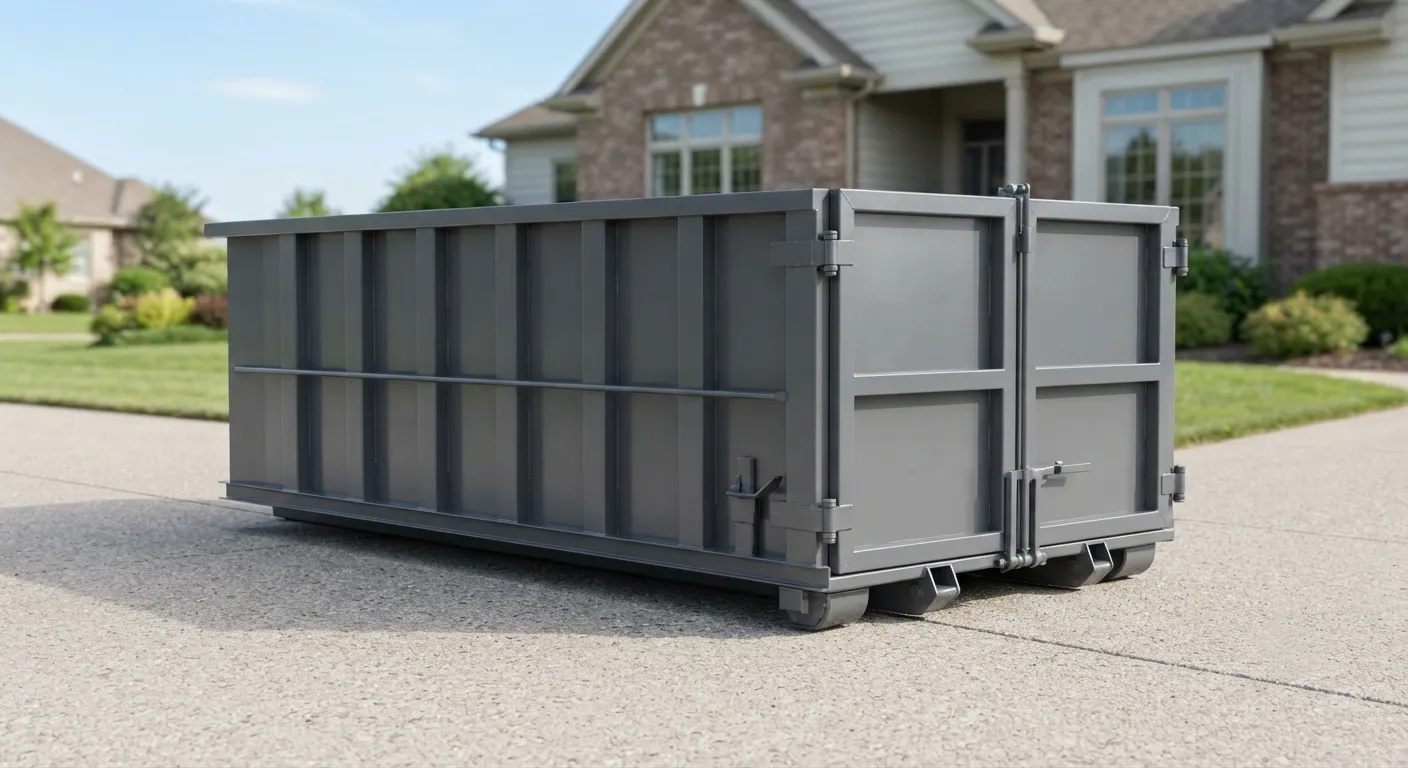
Why do these restrictions exist in Pflugerville?
Because a landfill will not take contaminated loads, and the hauler eats the cost of a rejected container. That cost gets passed to whoever rented the box. Pflugerville sits inside a permitting structure that treats hazardous and electronic waste differently from bulk trash, so before you order, check current dumpster permit requirements rather than assume last year's rules still apply. A grease interceptor from a restaurant kitchen is a good example of material that never belongs in a roll-off at all. It gets pumped separately once fats, oils, grease and solids reach 25 percent of the liquid depth, which is the standard trigger point, and that work falls under grease trap pumping, not dumpster service. Electronics, mattresses and certain treated woods often carry their own disposal fee even when they are technically allowed, so ask before loading them. If you are clearing out a house 7.0 miles west in Wells Branch or 9.0 miles northeast in Hutto, the same banned-materials list applies since the landfill destination does not change with the pickup address.
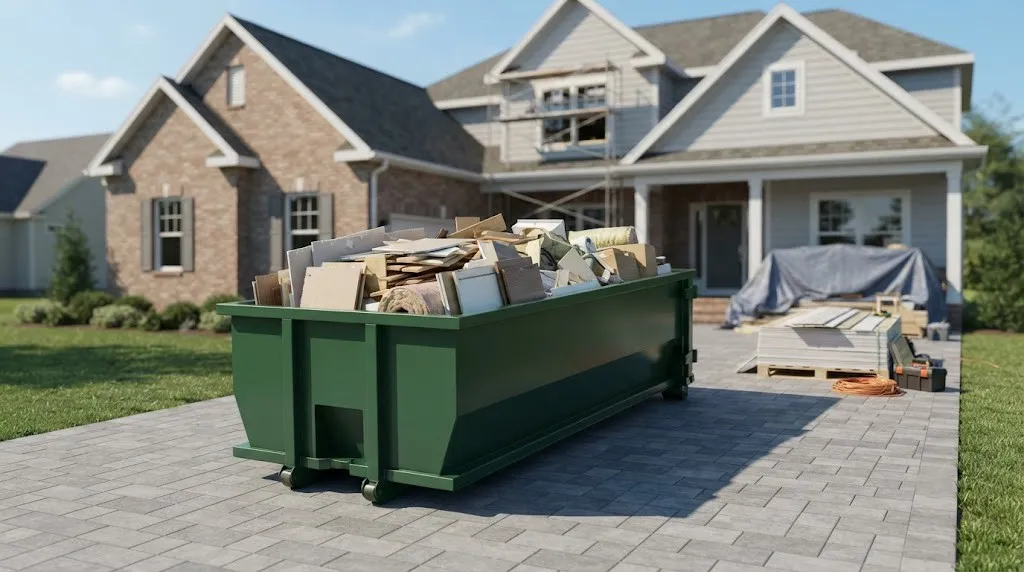
What happens if banned items end up in my dumpster?
The hauler can refuse the pull, charge a contamination fee, or both. Roll-off crews inspect visible loads before towing, and anything obviously hazardous, like a case of paint cans sitting on top, gets flagged on-site rather than at the transfer station. That delay costs you a day, sometimes more, on a 20 yard dumpster rental or 30 yard dumpster rental already scheduled around a tight renovation timeline. For jobs producing large volumes of concrete, shingles or dirt, a 40 yard dumpster rental does not solve the problem either, since the ban applies by material, not by container size. Review dumpster sizes and dimensions before ordering so you pick a box sized for what you are actually allowed to put in it. Homeowners tackling a bathroom gut or a garage cleanout should read what cannot go in a dumpster pricing alongside the restriction list, because a rejected load and a re-delivery both show up on the final bill.
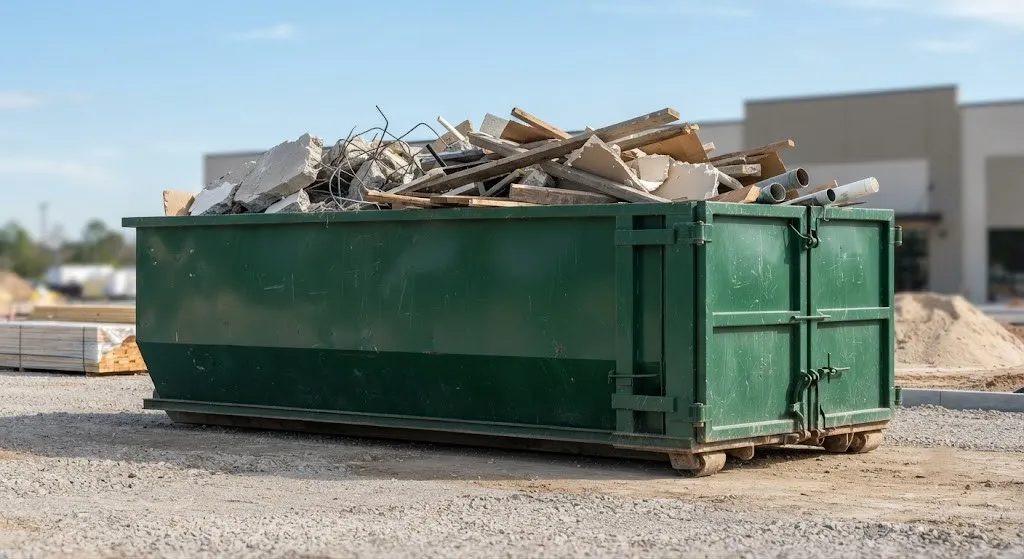
Where should banned materials actually go?
Most cities route paint, batteries and electronics to dedicated drop-off events or hazardous waste facilities separate from curbside pickup. Propane tanks typically go back to a supplier or an exchange point. Appliances with refrigerant often need a certified technician to reclaim the coolant before the shell can be scrapped as metal. None of this is dumpster work, and a good roll-off crew will tell you that upfront rather than let a box sit half-loaded with material nobody will haul. If you are unsure whether something qualifies, ask before delivery: a phone call is faster than a rejected pickup. Pflugerville residents planning a full property clean-out sometimes pair a dumpster with a storage container rental so usable items get set aside instead of tossed, and a 20ft storage container handles most single-family jobs without crowding a driveway.
| Material | Allowed in standard roll-off |
|---|---|
| Household trash, furniture | Yes |
| Wet concrete, brick, dirt | Separate heavy-debris box |
| Paint, herbicides, pesticides | No |
| Tires, batteries, propane | No |
| Appliances with refrigerant | No, needs reclaim first |
Frequently asked questions
Can I put a mattress in a roll-off dumpster?
Usually yes, but some haulers charge extra because mattresses take up volume without adding weight. Confirm with Pflugerville Porta Pros before the delivery truck arrives so it is not a surprise on the invoice. This is separate from the hazardous-material ban and comes down to hauler policy, not landfill rules.
Does paint count as hazardous waste?
Wet, unopened or partially used paint typically does. Fully dried, hardened paint in an open can is sometimes accepted as solid waste, but the rule varies by facility. Do not guess. Ask before loading, since a mixed load risks the whole container being rejected at the transfer station.
Can I dispose of yard waste in a dumpster?
Yes, in most cases, though large amounts of dirt or sod add weight fast and can push a bin over its rated limit. Yard debris is not hazardous, so the restriction here is about tonnage, not toxicity.
What about construction debris like drywall or shingles?
Both are generally fine in a roll-off. Shingles are dense, so a full load of tear-off material may hit the weight cap before the container looks full, which matters more on a 10 yard dumpster rental than a larger box.
Who do I call if I am not sure an item is allowed?
Call Pflugerville Porta Pros before you load anything questionable. A five-minute question beats a rejected pickup, a contamination fee, or a truck that shows up and cannot legally take the box back to the yard.
Next step
Get a delivery date
Tell us the address, the dates and the headcount. We size the order and confirm the route.